Historic Preservation Has to Start Somewhere: A Perspective on Monument Square
November 28, 2026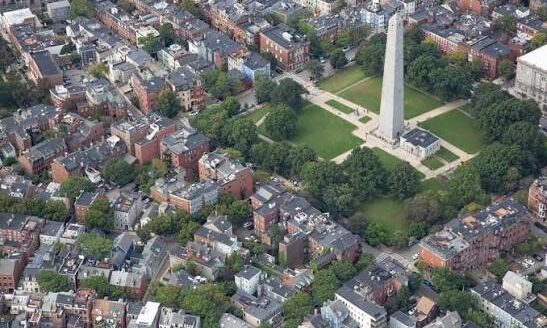
This article was contributed by Judith McDonough, Former Executive Director of the Boston Landmarks Commission
As Charlestown considers the proposed Monument Square Landmark District, questions have emerged about its boundaries and whether the designation should encompass more of the neighborhood’s historic landscape.
These are familiar questions to me. I was among the small group that helped draft Chapter 772, the legislation establishing the Boston Landmarks Commission, and later served as its executive director. My experience has given me a firsthand understanding of how historic districts are established, why their boundaries matter, and how they evolve over time.
One important lesson from Boston’s preservation history is that historic districts do not have to protect everything at once.
Historic Districts Often Start Small
When we developed Boston’s preservation legislation, we studied historic preservation approaches across the United States and Europe, including Boston’s existing districts in Beacon Hill and Back Bay. Chapter 772 contains the standard body of legislation and certain then novel aspects learned from the study, namely categories of designations to reflect relative significance and character of proposed districts, and the inclusion of standards and criteria for reviewing future physical exterior changes. Importantly, each set of standards and criteria is formulated specifically for each district and is presented to all prior to designation.
Most historic districts nationwide have a single set of standards, often quite general, and a few establish standards and criteria post designation, surprising owners.
Both began with relatively small boundaries and expanded over time as owners and residents became more familiar with the designation process, the consequent reviews of proposed exterior changes and its benefits.
There is a practical reason for this approach. Establishing a historic district requires extensive research, public engagement, and coordination among property owners. Beginning with a focused area makes that process more manageable while creating opportunities for additional protections in the future.
The same principle applies to Monument Square.
Some residents have questioned why the proposed district does not extend farther into Charlestown, including the Revolutionary War-era streets and Bunker Hill Housing Development. These concerns reflect an understandable desire to recognize the neighborhood’s broader history.
But starting with a defined district does not diminish the historical significance of surrounding areas or prevent future expansion.
Understanding What Landmark Designation Protects
Boston’s landmark legislation was designed to protect the existing buildings, structures, and landscapes that reflect a neighborhood’s historical development.
That distinction matters in Charlestown, where much of the original Revolutionary War landscape has changed dramatically over time.
For example, construction of the Bunker Hill Housing Development in the 1940s replaced much of the earlier neighborhood fabric. Although the land itself remains historically significant, the physical environment that once existed there is largely gone.
The Monument Square Working Study Report examines several potential boundary extensions, including Areas B and C. While these areas are historically significant, the original built environment associated with the Battle of Bunker Hill no longer survives in much of this landscape. In particular, construction of the Bunker Hill Housing Development in the 1940s replaced the earlier neighborhood fabric. Under the legislation establishing the Boston Landmarks Commission, historic significance alone is not sufficient for landmark designation. The designation must be supported by surviving physical features that represent that history. For this reason, I do not believe Areas B and C meet the criteria for inclusion in the Landmark District as proposed.
Landmark designation cannot recreate what has been lost. Other approaches, including historical interpretation and educational markers, can help recognize those important stories. The Bunker Hill Monument and grounds already receive federal protection, the highest level of preservation protection, as part of Boston National Historical Park.
Preservation and historical interpretation are both important, but they serve different purposes.
A Thoughtful Path Forward
Having reviewed the Monument Square Landmark District Working Study Report, I believe it provides an exceptionally thorough examination of the area’s historic character, proposed boundaries, and potential protections.
The Boston Landmarks Commission could proceed with the originally petitioned area while considering extensions separately, or evaluate related areas together. Both approaches have merit, and residents have opportunities to weigh in throughout the public review process. Owners and residents must be notified individually through assessors ownership records about official designation actions such as public hearings, etc., so the opportunity to comment is assured.
While landmark designation cannot resolve every development or planning challenge facing Charlestown, it can provide meaningful, legally enforceable protections for the historic character that makes Monument Square distinctive.
Boston’s experience demonstrates that preservation districts can begin with focused boundaries and evolve as communities recognize their value.
We should not allow the pursuit of the broadest possible boundaries to delay meaningful protection for an area that clearly warrants it.
Monument Square deserves that opportunity.
About the Author: A 50+ year Charlestown resident, Judith McDonough, helped draft the legislation establishing the Boston Landmarks Commission and served as its executive director from 1985 to 1993. She also served as executive director of the Massachusetts Historical Commission and is involved in preservation efforts through the Charlestown Preservation Society.
Contact Us
Interested in learning about the history of Charlestown, or getting involved? We'd love to hear from you!