Behind the Preservation: How the Charlestown Preservation Society Helped Save Memorial Hall
July 22, 2026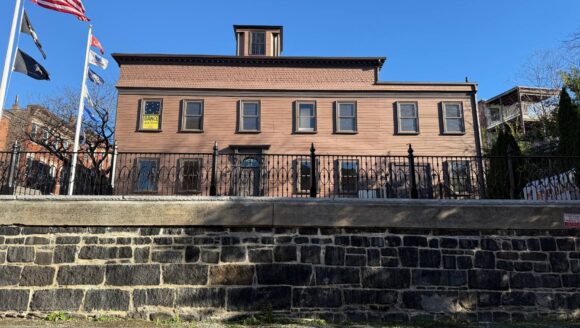
When people see a historic building, they often see the final result: the repaired details, restored craftsmanship, and renewed community life inside the space.
What they do not always see is the years of work that happen before restoration begins — the advocacy, research, fundraising, relationship-building, and organizational support required to make preservation possible.
The restoration of Memorial Hall at 14 Green Street is a powerful example of that work.
Recognized with a 2026 Preservation Achievement Award from the Boston Preservation Alliance, the restoration of Memorial Hall was a community-wide effort involving the Abraham Lincoln Post 11, Friends of Memorial Hall, preservation professionals, craftspeople, donors, and community members.
At the center of that effort was the Charlestown Preservation Society (CPS), whose role went beyond advocating for a historic building. CPS helped build the foundation that propelled this ambitious preservation effort to succeed.
Seeing the Potential — and the Need to Act
Memorial Hall is one of Charlestown’s most historically significant buildings.
Built in 1791 as the Federal-style mansion of Samuel Dexter, a cabinet secretary under President John Adams, the building later became home to the Abraham Lincoln Post 11 of the Grand Army of the Republic in 1888. That transformation created the unique architectural character that exists today — a rare combination of Federal and Second Empire styles.
More importantly, Memorial Hall became a community institution. For more than 130 years, it served as a gathering place for veterans, residents, and neighborhood organizations.
But by the late 20th century, decades of deferred maintenance placed the building’s future at risk. Historic materials were deteriorating, architectural features were compromised, and the cost of restoration was beyond what a small community organization could manage alone.
Recognizing the significance of the building and the urgency of protecting it, CPS stepped in to help move preservation efforts forward.
Creating the Pathway for Preservation
A major preservation project requires more than a vision. It requires structure, resources, and a strategy.
One of CPS’s most important contributions to the Memorial Hall effort was helping create the organizational foundation needed to pursue a restoration of this scale.
Working alongside the Abraham Lincoln Post 11 and community members, CPS helped support the formation of Friends of Memorial Hall, creating a dedicated nonprofit structure that could pursue preservation funding and coordinate long-term stewardship efforts.
CPS also helped identify potential funding opportunities and supported grant-writing efforts that contributed to securing more than $850,000 in preservation funding from public and private sources, including support from the City of Boston’s Community Preservation Act, the George B. Henderson Fund, and the Browne Fund.
This behind-the-scenes work is a core part of preservation advocacy. Before restoration can begin, communities need the resources, partnerships, and organizational infrastructure to make preservation achievable.
Connecting Expertise With Community Vision
Once the foundation was in place, CPS helped connect the project with the preservation professionals and craftspeople needed to restore Memorial Hall appropriately.
The restoration required specialized knowledge — from understanding historic materials and architectural changes over time to restoring traditional building elements using historically appropriate methods.
Partners including Spencer Preservation Group, North Bennet Street School, and other skilled preservation specialists brought their expertise to the project, ensuring the building’s history was respected throughout the process.
CPS’s role was to help bring together the people, resources, and preservation knowledge needed to turn a community goal into a successful restoration.
Protecting Memorial Hall for Future Generations
CPS’s work did not end with the restoration.
Recognizing that long-term preservation requires formal protection, CPS prepared and submitted the nomination for Memorial Hall to become a City of Boston Landmark. The Boston Landmarks Commission unanimously approved the designation in 2026, ensuring that this important piece of Charlestown history receives continued recognition and protection.
Landmark designation is one of the ways CPS works to safeguard Charlestown’s historic character — ensuring that buildings with significant stories have a voice in the future of the neighborhood.
Why This Work Matters
The Charlestown Preservation Society is proud to have played a role in helping secure Memorial Hall’s future. This project reflects the very purpose of CPS — advocating for Charlestown’s historic resources, building partnerships, and ensuring that the places that tell our story remain part of our community for generations to come.
Historic buildings do not preserve themselves. They are preserved because communities choose to invest in their future.
Contact Us
Interested in learning about the history of Charlestown, or getting involved? We'd love to hear from you!